
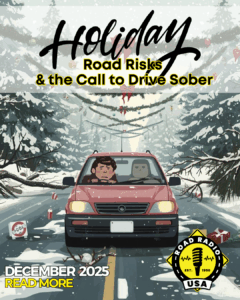
As December unfolds with its lights, celebrations, reunions, and travel, it also brings one of the most dangerous stretches for drivers on our roads.
For many of us, this is a season of hope, reflection, and togetherness. But for too many others, the combination of alcohol, travel, fatigue, unfamiliar routes, and winter conditions leads to tragedy. At Road Radio USA we believe that prevention is part of the holiday plan.
December is officially designated as National Impaired Driving Prevention Month. The advocacy organization Mothers Against Drunk Driving (MADD) points out that impaired driving crashes increase during December as more people travel and attend events where alcohol is served. According to data from the National Highway Traffic Safety Administration (NHTSA), during December 2023 alone there were 1,038 fatalities in alcohol‑impaired‑driving crashes across the United States. During the five‑year span between 2019 and 2023, 4,931 people were killed in December in alcohol‑impaired driving crashes.On holiday periods such as Christmas through New Year’s Day the share of fatal crashes involving an impaired driver rises to approximately 37 percent compared to about 30 percent during non‑holiday times.
These numbers are stark. They tell us that during the festive season the risk behind the wheel rises—not because driving becomes inherently more dangerous, but because the conditions of celebration, travel, consumption, seasonal distractions, and variable schedules converge. For parents, for teens, for every driver on the road, this season demands extra attention.
Why does December bring heightened risk?
There are more gatherings. Holiday lunches, parties, office events, family dinners, late‑night drives home. Larger volumes of alcohol consumption increase the odds of impaired drivers on the road. The National Institute on Alcohol Abuse and Alcoholism (NIAAA) notes that alcohol sales spike significantly during the holiday months, with December being the peak period. Travel increases. Families may be driving longer distances, often at night, in unfamiliar areas, perhaps with winter weather or heavier traffic than usual. NHTSA’s holiday statistics show that nighttime driving is especially dangerous. In December 2023, among drivers involved in fatal crashes between midnight and 2:59 a.m., 47 percent were drunk. Fatigue and distraction creep in. The build‑up of stress, tight schedules, colder weather, shorter days, and more errands can all combine to lower driver attention and increase risk.
But risk does not mean inevitability.
Good preparation, strong choices, community support and collective awareness can make this holiday season safer for everyone. At Road Radio USA our goal is to equip you with the facts, the mindset, and the practical steps that matter.
Start by planning ahead.
If you know you are attending a party where alcohol will be served, plan your ride home ahead of time. Designate a sober driver, schedule a rideshare, call for a family member. A simple decision made before the evening starts is one of the most powerful prevention strategies. MADD emphasizes this in its holiday safety messaging. If you are hosting an event, consider offering non‑alcoholic drinks, reminding guests to wait before driving, making sure overnight options are available. These are community‑minded gestures that reduce risk.
Emphasize the social and peer dimension.
For teens and young adults especially, peer pressure and social norms matter. If your peer group values safe driving and sober rides, then the culture shifts. When a teen hears that “everyone is planning a sober ride” or that “we always check in when we travel home,” that expectation supports good choices. Community campaigns highlighting sober driving help reinforce that message. During December, when travel and socializing increase, those messages matter more.
Use technology and resources to support decisions.
Apps that track rideshares, ride‑home credits, free tow programs, and community alert systems all help. Some regions deploy “Tow‑to‑Go” services during the holidays so that drivers who may be impaired can still get home safely with their vehicle.Familiarizing yourself with local resources before you need them lowers the barrier to making good choices during the moment.
Community enforcement and visibility count.
Law enforcement agencies often run extra patrols, sobriety checkpoints, and high‑visibility campaigns from December through New Year’s to discourage impaired driving. Those efforts send a clear message: safety matters, and enforcement is active. Data from Michigan shows that during a holiday enforcement period nearly 41 percent of road fatalities involved alcohol or drugs. That kind of focus is one part of a broader prevention ecosystem. But it only works if we as community members honor the intention.
Support for hosts, workplaces, and venues.
The holiday season places pressure not only on individuals but on venues and organizers. Workplaces hosting holiday parties can include explicit messaging about sober rides, designate transportation support, and remind staff of the risks. Churches, community centers, and civic groups hosting seasonal gatherings can make safety part of their event planning: having drivers available, setting time expectations so travel is not too late, monitoring weather and road conditions. The community’s social calendar must also be a safety calendar.
Focus on local context and local data.
While the national numbers are compelling, local communities must use local data and awareness. For example, if roads in your region are more dangerous at night, or if winter conditions are frequent, then your group should lean into those risk factors in planning. In many rural or semi‑rural parts of Pennsylvania, shorter daylight hours and winter weather make travel riskier. Recognizing that and adjusting expectations (such as meeting earlier, limiting long drives, checking vehicles for winter readiness) is part of the prevention strategy.
Watch for accessory risk factors: fatigue, distraction, weather, older vehicles.
Driving while impaired is a huge danger, but it rarely occurs alone. A driver might be slightly impaired, fatigued, distracted, and driving a less safe vehicle on slick roads. Layering risk is what pushes a situation toward tragedy. In December we must pay attention to all these variables. For example, in NHTSA’s winter holiday data the fact that 30 percent of drivers involved in fatal crashes at night in December were drunk signals how much night travel amplifies risk. So if you must drive at night this season, even if you are sober, make sure you are well rested, alert, sober, and your route is planned.
Make it part of the family conversation.
The road to prevention runs through dialogue. Talk with teenagers about the specific risks of holiday driving: longer travel, unfamiliar places, parties, celebrations with alcohol, impaired drivers sharing the road, weather and darkness. Set expectations before they head out. Ask them how they plan to get home. Reinforce that sober driving is not optional. Make this holiday season about safety as much as celebration.
Leverage media, social platforms, and community networks.
Road Radio USA will broadcast messages about sober driving, about planning rides home, about avoiding late‑night travel when possible. But individual community organizations can echo that: post signage in parking lots, send out email reminders, create social media pledges for safe rides home. The more visual and repeated the message, the more likely it is to stick.
Prepare for contingencies.
If you find yourself impaired, or the driver you expected is delayed or unable to drive, have backup. Make the plan. Mark the number of a rideshare app or local taxi. Know a friend who can step in. Keep a list of local support numbers. This type of “what if” planning is what differentiates a safe season from a risky one.
Celebrate responsibly and manage expectations.
For many the holidays bring joy, but also expectations and stress. Travel delays, weather disruptions, guest hosts, and schedules that change are all part of the season! Understanding this can help frame a safer mindset. When you accept that the gathering may happen a bit later, or that you may stay overnight rather than drive home late, you accept safety as part of the celebration. That is a powerful shift.
What about the younger drivers and passengers?
For young drivers or those still on provisional licenses, December presents special risk. Not only is alcohol culture heightened but peer travel, weekend events, school breaks, and party environments often combine. Review driving agreements with teens before the holidays, set clear expectations about sobriety, passengers, and late‑night travel. Encourage teens to hold each other accountable, to agree to watch for one another, and to arrange safe rides home. The social component is strong at this time, and habits formed during holiday seasons can influence behavior for the year ahead.
Community initiatives and partnerships matter.
Local law enforcement needs community partners. A bar, restaurant or gathering venue can send reminders to patrons to arrange sober rides home. A business can sponsor a free ride‑home coupon program for staff and customers during the holiday stretch. A community church can run a “safe driver pledge wall” or host an event where guests make a plan for their ride home. These initiatives build the culture of safety.
Reflect, learn and recommit.
As the calendar year winds down, the roads we travel during December offer a chance to reflect on how we drive, how we plan, and how we support one another. Encourage your community to examine how many rides were planned, how many guests delayed driving home, how many turned to rideshares instead of risk. Build a narrative of positive change, of lives saved, of choices made ahead of time.
December is beautiful. It brings lights, reunion, rest, and generosity. But it also brings risk.
Impaired driving is not inevitable in this season.
We can plan, act, choose, and support one another. At Road Radio USA we invite you to make this holiday season a commitment to safety. Choose a sober ride. Talk with your teens about the plan. Ensure your travel is mindful and prepared. Build community supports. Make responsible choices before the moment of risk arrives. When we plan ahead, we arrive safe. When we check in with one another, we drive smarter. When we connect intention with action, we protect lives.
Let this December be a season where celebration and safety go hand in hand. Let it be a season where we make the effort before the party begins, where we choose not only what we will celebrate but how we will arrive, how we will return, and how we will protect the ones we love.