
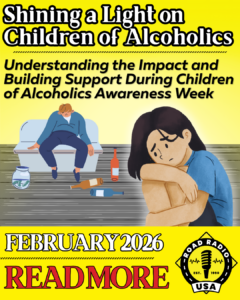
 Understanding the Impact and Building Support During Children of Alcoholics Awareness Week
In February, communities across the country observe Children of Alcoholics Awareness Week. This week is more than a marker on the calendar. It is a moment to shine light on millions of young lives shaped by the presence of addiction in their homes. It is a time to recognize that children who grow up with an adult struggling with alcohol use disorder or other substance use conditions often carry emotional, psychological, and social burdens that last long into adulthood. It is also a moment to remind caregivers, educators, health professionals, and neighbors that support can make a profound difference.
Research from the 2023 National Survey on Drug Use and Health found that nearly one in four children in the United States, roughly 19 million under age 18, lived with at least one parent or primary caregiver who had a substance use disorder. Alcohol use disorder was the most commonly diagnosed parental condition among these families, affecting more than 12 million children nationwide. More than 7.5 million children lived with a parent with moderate to severe substance use challenges, and more than 6 million had a parent with co-occurring substance use and mental health conditions. These figures reflect a dramatic rise in the number of children affected by parental addiction and underscore the urgency of awareness and support.
When a parent struggles with alcohol addiction, the effects reach far beyond the alcoholic’s own health. Children living in these households often grow up in environments marked by unpredictability, conflict, emotional unavailability, economic strain, neglect, or even abuse. Children sense stress before they can name it. They learn to adapt by suppressing their own needs, masking emotions, or attempting to control outcomes that are well beyond their control. The home becomes a place where emotional self‑preservation replaces play, where vigilance replaces relaxation, and where children move through their days waiting for the next disruption.
One reason this environment has such a profound impact is that children witness not just the behavior but the emotional landscape of addiction. Parental alcohol misuse often erodes routines, decreases emotional engagement, and impairs a caregiver’s ability to respond to a child’s physical and emotional needs consistently. Household structure may be unstable. Meal times, bedtimes, school attendance, and social routines often become irregular. A child may be left to care for siblings or manage the household when the parent is intoxicated, absent, or incapacitated. These patterns interrupt the sense of safety that children need to thrive.
Growing up in a home affected by alcohol has been linked to a range of emotional and behavioral challenges in children. Research consistently shows that children of parents with alcohol use disorders are at much higher risk for anxiety, depression, and low self‑esteem than their peers. A study comparing children of alcoholics with children of non‑alcoholic parents found significantly higher rates of anxiety, depression, and social phobia in children whose parents misused alcohol. These emotional burdens often emerge early in life, sometimes as young as preschool age, and can shape developmental trajectories in profound ways.
School performance often suffers. Children from homes affected by addiction tend to demonstrate lower academic achievement, difficulty concentrating, and behavioral issues in class. They may withdraw socially or act out in ways that mask deeper stress or emotional pain. A child’s struggle in school is not simply an educational problem. It is a reflection of the emotional and cognitive load they carry from home.
Beyond emotional distress and academic challenges, children who grow up with a parent who abuses alcohol are at higher risk for developing substance use disorders themselves. Genetics contribute to this vulnerability, but environment and learned behaviors play a major role. Studies indicate that these children are four times more likely to develop an alcohol use disorder than children whose parents do not have alcohol problems. These findings suggest that parental drinking shapes not only the immediate home environment but also risk patterns that continue into adolescence and adulthood.
The reasons for this increased risk are both biological and behavioral. Children raised in households where alcohol misuse is normalized often internalize the idea that alcohol is a solution for stress, a social tool, or a way to cope with pain. They may begin experimenting with substances earlier and escalate their use faster than peers who grow up in more stable environments. In addition, genetic predispositions interact with environmental stressors to make these children more sensitive to the rewarding effects of alcohol, increasing vulnerability to addiction later in life.
Children of alcoholics also experience higher rates of social and interpersonal challenges. Trust issues are common, rooted in inconsistent caregiving or emotional neglect. These children may form insecure attachment patterns, carrying into friendships and intimate relationships later in life. Emotional regulation can be difficult when a child grows up watching dysregulated behavior modeled as a norm. In adulthood, these patterns may express as difficulty forming close relationships, fear of intimacy, or avoidance of emotional expression.
Living in a household with severe alcohol misuse often overlaps with other adverse childhood experiences, such as domestic violence, parental mental illness, economic instability, or separation and divorce. Research on adverse childhood experiences (ACEs) shows that exposure to multiple stressors has a cumulative impact on long‑term health and behavior. Children who experience several ACEs are significantly more likely to develop chronic health conditions, substance use disorders, and mental illness later in life. While having a parent with a substance use disorder is not deterministic, it is a powerful risk factor that intersects with other stressors to shape long‑term outcomes.
The effects are not limited to childhood. Studies show that adults who grew up with alcohol‑dependent parents carry lasting imprints from those early environments. They often report higher rates of mood and anxiety disorders than peers who did not grow up in such homes. These adult children of alcoholics sometimes struggle with self‑worth, emotional regulation, and trust in relationships. Some carry guilt or confusion about their upbringing, feeling responsible for family dynamics that were never in their control. These emotional legacies highlight why awareness and early support matter so profoundly.
Children of Alcoholics Awareness Week reminds us that these young lives are not isolated statistics. They are friends, classmates, teammates, neighbors, and students whose needs often go unseen. An annual week of recognition and education provides a chance to bring visibility to their experiences, to remind families that they are not alone, and to encourage communities to take action.
Supporting children of alcoholic parents begins with understanding and empathy. A child’s expression of emotional pain may look like anger, withdrawal, misbehavior, or anxiety. A teenager who suddenly drops grades might be signaling stress at home. A younger child who worries excessively may be mirroring the uncertainty they feel when home life lacks predictability. Adults in a child’s life—teachers, youth leaders, extended family members, family friends, and coaches—can play crucial roles by noticing these signals and offering consistent, safe connection.
Families can support children by creating stable routines, open conversations, and emotional availability. Even in households affected by alcohol misuse, a parent who makes space to listen and validate a child’s feelings helps build resilience. Children need to know their experiences matter, that their feelings are real, and that it is safe to talk about what they are living through.
Extended family and community networks also matter. A supportive aunt, a high school counselor who checks in, a faith leader who listens without judgment, a pediatrician who asks about home life—these adults can offer lifelines. Support also means connecting families with professional help, such as counseling, family therapy, and community support groups, where both parents and children can receive tailored guidance and tools for coping and healing.
Public education about the risks and experiences of children of alcoholics is another critical piece. Awareness campaigns during this week and throughout the year help reduce stigma. When people understand addiction as a health condition and not a moral failing, families are more likely to seek help. Open discussion reduces the shame that often accompanies these struggles and helps children and adults alike feel seen and understood.
Schools can leverage this awareness week to provide age‑appropriate education about healthy relationships, emotional regulation, and coping skills. Teachers and support staff can benefit from training that helps them recognize signs of stress and trauma in students. When education professionals feel equipped to respond sensitively and knowledgeably, children receive support that acknowledges their lived experiences.
Mentorship programs also offer powerful support systems. A consistent, nonjudgmental adult presence—whether through Big Brothers Big Sisters, sports coaching, arts programs, or community youth groups—can provide alternative models of stability and trust. These relationships show children that they are valued beyond their home environment and that support exists outside of their familial struggles.
Breaking the cycle of intergenerational substance use is not simple, but it is possible. Research shows that children of alcoholic parents who receive supportive relationships, early interventions, and positive role models demonstrate higher levels of resilience. Protective factors such as strong school engagement, connection to community, and emotional support reduce the likelihood of the child developing a substance use disorder later in life. This highlights the importance of both prevention and ongoing care.
In addition to emotional and social support, addressing structural barriers is essential. Access to behavioral health services, insurance coverage for family therapy, and community resources for stress management and counseling influence outcomes for these children and their families. Policymakers, schools, health systems, and communities all have a stake in making these supports accessible and equitable.
Children of Alcoholics Awareness Week also invites adults to reflect on our own patterns of response. Adults who grew up in households with alcohol misuse may find this period triggering or reflective. Parents or caregivers in recovery might experience a sharper awareness of how their behavior impacts their children. This week can be a reminder to seek connection, therapy, or peer support when needed. Adult role models who address their own challenges honestly and work toward healing teach a powerful lesson to the next generation.
For community members who may not personally know a child of an alcoholic parent, this awareness week is still relevant. Every adult interacts with children in some capacity. A teacher, bus driver, librarian, clergy person, coach, neighbor, or store clerk may cross paths with a child silently carrying distress. Being present, listening without judgment, and offering small gestures of kindness can shift a child’s experience of the world in meaningful ways.
Awareness without action does not change outcomes. This week and every week, communities have the opportunity to turn understanding into support, education into intervention, and empathy into connection. In schools, in neighborhoods, and in social networks, we have the capacity to provide experiences that reinforce safety, inclusion, and emotional wellness.
When children see adults who acknowledge their reality without blaming them, when they hear messages that recovery and support exist, and when they receive consistent care and connection, they begin to rewrite the narrative of their own lives. They move from coping to thriving. They learn that their past does not define their future.
Children of Alcoholics Awareness Week invites us to lean into these truths. It asks us to notice the quiet struggles around us. It reminds us that addiction does not only affect the person using substances. It affects entire families, especially the youngest members whose development depends on stability, nurturing, and emotional security. It calls us to build systems of support, understanding, and resilience.
The impact of growing up with an alcoholic parent is deep, but it is not destiny. With compassion, awareness, supportive relationships, and community resources, children in these homes can find a path toward healing. They can develop the strength to make healthy choices, build fulfilling relationships, and break cycles that no longer serve them. This awareness week is a moment to honor that possibility and to commit to action that extends far beyond seven days in February.