
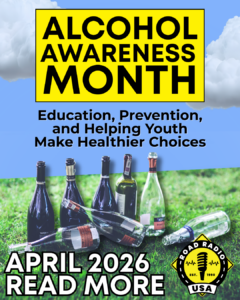
 Education, Prevention, and Helping Youth Make Healthier Choices
April has become more than just a transition into spring. It is Alcohol Awareness Month, an annual opportunity for families, schools, and communities to educate themselves about alcohol use and misuse, to promote prevention strategies, and to increase understanding of treatment options. This focus on alcohol coincides with other important substance awareness initiatives in April, including Prescription Drug & Marijuana Misuse Prevention Awareness Month and the National Prescription Drug Take Back Day, reminding us that substance risk goes beyond alcohol and includes how we store, share, and dispose of medications. Together, these efforts create a springtime framework for stronger education and healthier habits.
Alcohol remains the most commonly used and misused substance in the United States. Research from the National Institute on Alcohol Abuse and Alcoholism shows that more than 178,000 alcohol‑related deaths occur each year, making alcohol a leading preventable cause of death in this country. Alcohol misuse contributes to more than 200 disease and injury‑related health conditions, costing individuals, families, and communities dearly. These consequences unfold in emergency departments, in crashes, in chronic illness, and in disruptions to relationships and opportunity. The purpose of Alcohol Awareness Month is simple: to arm people with knowledge about risk, to break down stigma around alcohol use disorders, and to highlight resources that help individuals and families take healthier paths.
Understanding how alcohol affects young people is especially important during this observance. National surveys show that although alcohol use among adolescents has declined dramatically over the past decades, a significant number of youth still drink. According to the 2024 National Survey on Drug Use and Health, about 6.6 percent of youth aged 12 to 17 reported drinking alcohol in the past month, with 3.5 percent reporting binge drinking and even smaller percentages reporting heavy use. These numbers are substantially lower than in past generations but still represent real risk. Even occasional underage drinking can influence brain development and increase likelihood of future misuse.
The good news is that overall youth substance use remains near historic lows. Data released in late 2025 from the federally funded Monitoring the Future survey found that most teens report abstaining from alcohol, marijuana, and nicotine use, with about 91 percent of eighth graders, 82 percent of 10th graders, and 66 percent of 12th graders reporting no use of those substances in the past 30 days. These rates mark record levels of recent abstinence and reflect broader cultural shifts, including changing social patterns and prevention education. Yet the survey also identified slight increases in hard drug use such as heroin and cocaine, signaling that vigilance remains necessary even amid encouraging trends.
Alcohol Awareness Month invites us to look holistically at substance use risk and prevention. It is easy to talk about alcohol on its own, but substance use behavior is complex. April also includes Prescription Drug & Marijuana Misuse Prevention Awareness Month, a time when educators and parents can talk about prescription medications, how easily they can be misused when not taken as prescribed, and how unused medicines can pose a danger if kept at home. The DEA’s National Prescription Drug Take Back Day in April reflects the importance of safe disposal. In the most recent Take Back Day event, communities collected more than 620,000 pounds of unused or expired medication, keeping those substances out of medicine cabinets where they might tempt accidental misuse or diversion to youth.
April also intersects with a cultural phenomenon that has grown over decades—“4/20”, a date many associate with marijuana use. Though the date itself does not have official public health endorsement, it has become widely recognized across social and media platforms as a day to celebrate cannabis. That has created conflicting messages for youth about substance use. On one hand, Alcohol Awareness Month and other prevention campaigns work to educate teens about the risks associated with substances. On the other hand, social posts, entertainment media, and casual references to “4/20” can normalize marijuana use or present it as a harmless activity.
Perception drives behavior. When teens see persistent media portrayals that show cannabis as risk‑free or socially desirable, they may underestimate its potential impact on their developing brains. Most scientific evidence indicates that early use of marijuana—especially high‑potency products—can affect regions of the brain that control memory, learning, and decision making. Teen brains continue maturing well into the mid‑20s, and introducing psychoactive substances during this period carries risk even when occasional. Normalization in culture, elevated by social media and entertainment, can obscure these facts and make it harder for young people to connect scientific evidence with lived consequences.
Another piece of the discussion involves prescription drugs. Many teens do not view misusing prescription medication as “real drug use” because they come from medical contexts and often feel familiar. Yet your own medicine cabinet can be a source of significant risk if unused pills are left accessible. Research shows that most teens who misuse prescription drugs obtain them from family, friends, or their own home supply. When communities participate in Take Back Day events or use safe disposal sites year‑round, they remove that risk. Normalizing safe medication disposal is an important part of prevention culture, not just for prescriptions but for how we think about substances and responsibility.
Alcohol Awareness Month also provides a platform to highlight treatment and long‑term recovery. Substance use disorders do not resolve simply with willpower. Like other chronic health conditions, effective treatment often requires a combination of medically supported treatment, behavioral therapy, peer support, and ongoing recovery communities. National resources such as those from the Substance Abuse and Mental Health Services Administration offer tools for screening, connections to treatment, and support networks. Knowing these resources exist takes fear out of reaching out for help and invites families to engage proactively.
Education plays a central role in prevention. For families, talking about alcohol and substance use openly and frequently can reduce risk. When parents normalize discussions about how alcohol affects the brain, body, and behavior, they give teens a framework for making informed decisions rather than guessing what is true. Research shows that when parents set clear expectations about substance use and follow through with consistent messaging, rates of underage use tend to be lower. Teens who believe their parents disapprove of underage drinking are significantly less likely to drink compared to peers whose parents send mixed or permissive messages.
Schools and community organizations also carry responsibility. April can become a time when curricula include updated information about alcohol and drugs, when educators invite experts to speak, and when peer‑led campaigns allow youth voices to promote healthy norms. Young people often listen more deeply when they hear from peers, especially when messages avoid scare tactics and instead present honest science and real stories.
Cultural events and messaging deserve careful reflection too. While celebrations like 4/20 may seem harmless or fun to adults or older teens, younger adolescents may interpret them as endorsements of use. Normalization in pop culture, where marijuana use appears in music videos, social media reels, or jokes, can dilute the perceived risk. Preventive education must contend with these influences by offering youth credible, relatable information about marijuana’s potential impacts, particularly on developing minds. Teen perception of low risk correlates with increased likelihood of use, so helping adolescents critically evaluate what they see in media can strengthen resistance to peer or cultural pressure.
Alcohol and drug use behavior is also linked to mental health. The Centers for Disease Control and Prevention reports that many teens who experience anxiety, persistent sadness, or feelings of hopelessness may use substances to try to cope. Substance use rarely improves underlying mental health conditions and often worsens them. Recognizing this connection reinforces the need for supportive mental health resources and early intervention efforts that identify and address emotional challenges before they turn into risky substance use.
Prevention and education also benefit from community partnership. Churches, after‑school programs, youth clubs, sports teams, and local nonprofits can host discussions, screenings, and events that emphasize healthy alternatives to substance use. Families find strength when they know they are not alone in this work. Every adult in a young person’s life can reinforce consistent messages about safety, curiosity, prevention, and respect for one’s own health.
One of the most impactful components of Alcohol Awareness Month is the emphasis on proactive action rather than reactive crisis management. Encouraging an alcohol‑free weekend or other local alcohol‑free events invites everyone to experience the benefits of socializing and community life without substances being the centerpiece. These events send a simple but powerful message: social connection and enjoyment do not depend on alcohol or drugs. When communities model alternative forms of celebration and stress relief, teens gain new reference points for fun and belonging.
Another component of prevention involves parents examining their own habits. Adult behavior sets the context in which teens form expectations. When kids see adults drink to cope with stress or mask emotion, they may interpret that as a healthy strategy for their own challenges. When adults instead model moderation, balance, and healthy coping mechanisms, they reinforce the idea that life’s challenges can be met without relying on substances.
Alcohol Awareness Month invites all of us to reflect not just on alcohol alone but on how we talk about substances, how we model behavior, and how we support young people as they navigate complex social landscapes. The message is not fear. It is clarity. It is readiness. It is honest education matched with empathetic support.
April also reminds us that prevention is not passive. It requires intention and consistency. It requires adults, communities, and youth working together to replace myths with facts, to highlight healthy choices rather than normalize risk, and to provide safe disposal of medications rather than leave them in easy reach. It requires a cultural shift that does not trivialize marijuana because a date on a calendar says “celebrate,” or dismiss prescription drug risk because it came from a doctor.
In reflecting on Alcohol Awareness Month and its related initiatives, we can bring the conversation full circle back to our mission at Road Radio USA: education prevents harm, informed decisions empower youth, and community actions create safer environments for every family. Building a culture where youth feel equipped to make tough choices takes everything from open conversations to evidence‑based prevention programs, from supportive social activities to responsible media literacy.
This April, let’s take the opportunity to deepen our knowledge about alcohol and other substances, engage in meaningful dialogue, and reinforce the idea that health, well‑being, and community connection matter more than any temporary escape. Let this month mark a point where education and prevention become even stronger, where families are supported, and where youth feel empowered to choose health, safety, and purpose over risk.
Together we can make sure that Alcohol Awareness Month not only raises awareness but drives action that continues long after April ends.